
30 September 2026
Recognising excellence in women’s MS research
Professor Sandra Vukusic has won the 2026 Rachel Horne Prize for research that has improved pregnancy, treatment and care for women living with MS.
15 June 2026
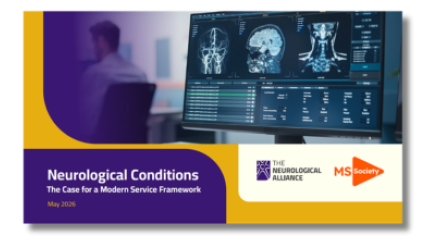
A new report authored by the Neurological Alliance and the MS Society calls for a dedicated Modern Service Framework (MSF) for neurological conditions in England. The report sets out the urgent need to transform how care is delivered in the NHS. Neurological conditions affect around one in six people and include more than 600 different disorders, many of which, including multiple sclerosis (MS), are complex, lifelong conditions. Yet despite this, services remain fragmented, inconsistent and under pressure.
For people with MS, the current system often feels disjointed and difficult to navigate. Due to the complex nature of MS, care is often spread across several services, some with long waiting times, regional variations and limited coordination between specialists, community teams and support services. Too often, support arrives only when symptoms worsen, rather than preventing deterioration in the first place. This often leads to avoidable hospital admissions, poorer quality of life for people with MS and their loved ones, and increased strain on the NHS.
The report sets out a “moonshot” goal, which is the term used for an ambitious project which addresses a huge problem. The goal is to reduce avoidable emergency admissions by 30% within 10 years. For people with MS, this would mean fewer occasions when complications with the disease escalate into a crisis, better day-to-day management, and quicker access to support when it’s needed.
The MSF would introduce a coordinated, national approach to neurological care, built around five key principles:
MS is unpredictable and varies widely from person to person. Effective care depends on continuity, coordination and timely intervention. These are areas where the current system often falls short. The proposed MSF would:
Ultimately, the MSF aims to move away from the current crisis-driven model towards one that is preventative, personalised and sustainable.
While the challenges facing neurological care are significant, MS Trust supports this new initiative and will continue to work toward equitable quality care for people with MS across the country. With strong leadership, better use of digital tools, and closer collaboration across health and social care, neurological services can be transformed, which in turn will vastly improve the lives of people living with MS.
MS is unpredictable, treatment and support shouldn’t be.
This summary was generated using AI. It has been reviewed and edited by MS Trust for accuracy and clarity.
Keep up-to-date with the latest MS news, explore new research, read the stories of people living with MS, find out practical tips from MS experts, and discover exciting fundraising opportunities
If you would like to sign up for post or telephone (SMS) updates you can complete our sign up form here