
30 September 2026
Recognising excellence in women’s MS research
Professor Sandra Vukusic has won the 2026 Rachel Horne Prize for research that has improved pregnancy, treatment and care for women living with MS.
28 April 2026

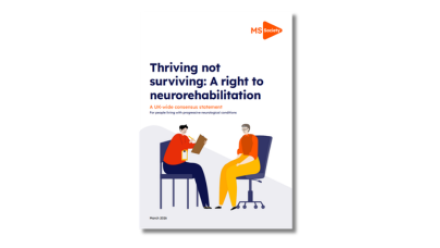
MS Trust is proud to have endorsed Thriving Not Surviving: A Right to Neurorehabilitation which is a UK wide consensus statement supported by 19 leading neurological charities and professional bodies. Together, we are calling for urgent action to transform neurorehabilitation for people living with progressive neurological conditions.
At least one in six people across the UK are affected by a neurological condition, which are illnesses that affect the brain or nervous system. These conditions are now recognised as the leading cause of disability worldwide. In the UK there are over 150,000 people living with multiple sclerosis, which is usually identified in young adulthood between the ages of 20 - 50 years, with the average age of diagnosis approximately 30 years. MS is most common in people aged between 60–69 years for both sexes and it is the most common non-injury cause of disability in people under 40 years of age. Alongside this, 43% of people with MS stop working within three years of diagnosis which increases to 70% after 10 years. This generates a significant cost to the health service and the person living with MS. In the general population of working age people (40 – 74 years) around 75% of people are currently employed, compared to just 40% of people living with MS in the same group.
The Thriving Not Surviving report also highlights that too many people are facing long waiting times for appointments. They are being refused care or slipping through the gaps of a system not designed with their needs in mind.
Against this backdrop, for the first time the NHS has set out a specific MS service specification as part of its wider transformation plans. This represents a positive step forward and signals a commitment to improving MS care while addressing the long‑standing variation, delays and gaps in services highlighted in the report.
Where you live should never determine the standard of care you receive. Yet the report shows striking variation across the UK. Some areas benefit from joined up community teams while others offer no specialist neurorehabilitation at all. Workforce shortages compound the problem, with many regions unable to recruit the physiotherapists, occupational therapists, speech and language therapists, neuropsychologists or rehabilitation physicians needed to provide consistent support.
The consequences are profound: preventable hospital admissions, early loss of independence, avoidable social isolation, and families absorbing ever greater caring responsibilities.
Neurorehabilitation services remain geared towards short, one-off interventions. This approach may suit an emergency event like a stroke but does not meet the needs of people with progressive conditions such as MS. In these conditions symptoms fluctuate, meaning support is needed at different points over a lifetime.
Instead, people are often left waiting months for an assessment, discharged too early, or told they don’t meet referral criteria at all. For many, this leads to a deterioration or deconditioning that could have been prevented with timely rehabilitation. For people with MS, whose symptoms are often invisible and rarely understood or recognised, this is often their experience.
Neurorehabilitation is far more than physiotherapy or a short block of exercises. It is a joined up support service bringing together a range of professionals to treat complex needs and support the person living with the neurological condition to:
Crucially, effective neurorehabilitation prevents decline rather than waiting for crisis. Which in turn improves quality of life while reducing pressure on health and social care.
The report sets out ten clear, evidence based principles for transforming care so people can genuinely thrive. These include:
People with progressive neurological conditions deserve more than to simply survive. They deserve dignity, opportunity, and support to live life fully. MS Trust is proud to stand alongside charities across the UK in calling for urgent action on this. We want to ensure that everyone living with a progressive neurological condition can access the neurorehabilitation they need to thrive.
BMJ Best Practice (2021) Multiple sclerosis - symptoms, diagnosis and treatment. BMJ Best Practice. BMJ publishing.
Montalban, X., Gold, R., Thompson, A.J. et al. (2018) CTRIMS/EAN guideline on the pharmacological treatment of people with multiple sclerosis. European Journal of Neurology 25(2), 215-237.
Wallin, M.T., Culpepper, W.J., Nichols, E. et al. (2019) Global, regional, and national burden of multiple sclerosis 1990-2016: a systematic analysis for the Global Burden of Disease Study 2016. Lancet Neurology 18(3), 269-285.
Keep up-to-date with the latest MS news, explore new research, read the stories of people living with MS, find out practical tips from MS experts, and discover exciting fundraising opportunities
If you would like to sign up for post or telephone (SMS) updates you can complete our sign up form here