30 September 2026
Recognising excellence in women’s MS research
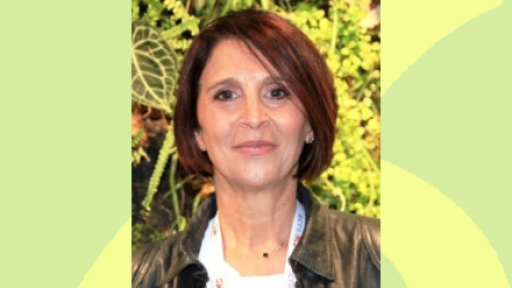
Professor Sandra Vukusic has won the 2026 Rachel Horne Prize for research that has improved pregnancy, treatment and care for women living with MS.
21 January 2025

A reader has been enquiring on my progress since my 2020 piece on fatigue, and any insights and tools I’ve developed since. These are questions I have to admit I’d never really asked myself, so I welcome this opportunity for reflection.
Since I wrote this article, my life has undergone big change: I left my job in tech in the fall of 2019, partly because it had switched to remote work, something I found personally alienating, and professionally counter-productive. The plan was to take a mini-sabbatical and come back to software engineering around March 2020, looking for in-office positions. A certain public health emergency torpedoed this plan, teaching me in passing an important lesson on fate’s own sense of irony.
Fast forward to the fall of 2021, and I’m starting teacher training, doing a PGCE in secondary computing, through a scholarship from the British Computing Society (something about which I was initially boastful - those scholarships are quite selective on paper - until I realised that every year, the number of available scholarships is larger than the number of applicants to teacher training in computing).
I was dreading the energy demands of the PGCE: four days in school, one day at Uni, with a teaching load ramping up through the terms, and the academic side requiring the production of postgraduate level papers through the year. But fate’s own cosmic wink struck again: one of the podcasts I edited for the MS Trust in 2021 featured the story of Suzy, who, too, trained in secondary computing (also on the BCS scholarship) after her diagnosis. This gave me hope.
Ultimately I pulled it off. Even with a bout of Covid in the middle of the winter term. It did feel like I was running on adrenaline throughout, not something I could sustain. The academic side of the PGCE and my broader struggle with the organisation required of an efficient teacher (especially in training), combined with what I was learning about Special Educational Needs made me seek an ADHD assessment. I was diagnosed in July, as I qualified as a teacher.
Then, the following November, I started on stimulant medication. From this point on, I can't really comment on MS fatigue, as I've been effectively micro-dosing dextroamphetamine. It, unsurprisingly, helped. For while.
But, two years later, equally unsurprisingly, the magic is fading. Every study that tries to medicate MS fatigue has found it doesn't work in the long term. So I'm back to strategies. So, after this long introduction, here it is:
I'm privileged in being able to work to those principles, as these days I have near-full control of how I spend my days. I've taken a break from teaching to start a PhD in Education, which has flipped my neurotype vs context situation. Much as the inflexible demands of a school timetable didn't always gel with the fatigue (though you don't need to have MS to dread having Year Nine last period on a Friday), the firm structure of teaching (day, week, term, year, repeat, relatively clear expectations and deadlines) was doing wonders for the ADHD.
So I try to design my own structure, and I can keep it flexible enough to accommodate the MS. I'm lucky enough, energy wise, that my routine is less about alternating activity and rest than rotating activities which demand different type of energy, and rest - kind of like the way crops are rotated in farming, with a fallow year at regular intervals.
When it works, it's beautiful. Taking a break from work to take a walk in nature, or following household chores with a call to a friend. The problem is that a single bad night means sleeping in (a decadent seven am for me), a shortened morning routine and having to skip or re-schedule self-care. Or I'll get stuck into a problem, hyperfocus, and go over the allowed period by a factor of four, draining cognitive energy. But that's not as bad, as it often yields results. How do you think I wrote the first draft of this?
Still. Just the fact of trying, the process of data gathering, analysis, theory building, hypothesis testing, framework design, then iteration, which, when written thus, sounds exhausting, nonetheless gives me a sense of agency over my own energy management. I do it like a scientist because this is how I learn - maybe because I don't really know how to 'listen to my body' and need hard, quantitative data. I lean heavily on time-tracking and time-management because I learnt this from the ADHD. What worked for me won't work for many. But it's the agency that matters.
I encourage everyone to find their own strategies. Not for the outcome - the destination, but for the journey. For the gratifying feeling to be doing something, anything about it. Install that fatigue tracking app. Try a week with a systematic half-hour lie-down after lunch. Set a hard bedtime. Set a no-more-screen time an hour before that. Set a hard wakeup time - have you tried those dawn simulator clocks? Drop something from your diet. Take a cold shower in the morning. Take a hot bath in the evening. Create a ritual. Burn sage. Whatever works for you. Discard what doesn't, keep what does.
However we wrangle the beast of MS, mindset makes a difference. It's trite, it's twee, I hate having to write it, but it is the truth. So approaching fatigue - or MS in general for that matter - with a proactive attitude firmly lets you grab the locus of control by the horns.
Because that feeling you get when you try something different, tweak it, and see it working, that feeling that you've made your own life more accessible, that you've given yourself your own reasonable adjustment - that feeling, that's what's been keeping me going. I hope it does you too.
Keep up-to-date with the latest MS news, explore new research, read the stories of people living with MS, find out practical tips from MS experts, and discover exciting fundraising opportunities
If you would like to sign up for post or telephone (SMS) updates you can complete our sign up form here