
Steroids for MS relapses
Learn how steroid treatment can manage some MS relapses. Discover how methylprednisolone works, when it's recommended, how you take it and possible side effects.
A multiple sclerosis (MS) relapse is the sudden onset, or significant worsening, of MS symptoms that lasts for anywhere between 24 hours and several months.
Relapses are a common part of MS for many people, particularly for those living with relapsing remitting MS (RRMS). People with secondary progressive MS (SPMS) or primary progressive MS (PPMS) may also experience relapses, although these tend to occur much less frequently.
On this page we look at what MS relapses are and why they happen. We also cover how to recognise if you’re having a relapse, the options for managing them and the recovery process.
An MS relapse is where you develop new MS symptoms, or when existing symptoms significantly worsen, over a period of hours or days. Before your MS team can diagnose a relapse, they will also consider the following factors.
Most people with MS live with some day-to-day fluctuations of their symptoms. But between relapses, this background level is usually fairly stable. It is when symptoms significantly change that it might be a sign that you’re having a relapse.
You may hear people call their MS relapses by other names, including:
Relapses can last anywhere from a few days to several weeks or even months.
No two relapses are the same. Some are very mild and may have very little impact on your daily life. Others are more severe and may affect the things you can do. In some cases, you may require a short stay in hospital followed by a longer period of recovery. They tend to happen most often in the first few years after diagnosis, but you can have one at any time.
In relapsing remitting MS, following a relapse, there are periods of time where you may have no symptoms, or your symptoms are relatively stable. This is known as remission. Remission can last for months or years until it is interrupted by another relapse.
In secondary progressive MS and primary progressive MS, symptoms may continue to gradually worsen after a relapse resolves due to the ongoing low-level inflammation that contributes to progression.
Our nerve cells carry messages between the brain and spinal cord (central nervous system) and our organs and limbs. Nerve cell axons are insulated by a covering of a fatty protein called myelin. Myelin helps ensure that messages are passed quickly and effectively along the nerve axon.
During an MS relapse, cells of the immune system mistake the myelin sheath for an infectious agent (pathogen) such as a virus or bacteria. They attack it, causing inflammation, which damages the myelin and strips it away from the axon (demyelination). This damage means messages travelling along the axon are slowed or blocked, which results in the symptoms of an MS relapse.

The symptoms you experience will depend on where in the brain or spinal cord any damage has happened. This is why people with MS experience different symptoms and why symptoms can vary from one relapse to another.
Following a diagnosis of MS, it can be difficult to recognise whether new or worsening symptoms represent a relapse. In many cases, the changes may be part of the normal fluctuations that occur with MS, rather than the beginning of a relapse.
Over time, you will become more familiar with your MS and develop a better understanding of whether a change in symptoms represents a relapse, an everyday fluctuation in symptoms or a response to something else such as temperature sensitivity or an infection.
In a relapse, you will generally notice symptoms becoming progressively worse over days or weeks, after which they tend to stabilise.
If you are unsure whether any changes in symptoms are a relapse or not, contact your MS team.
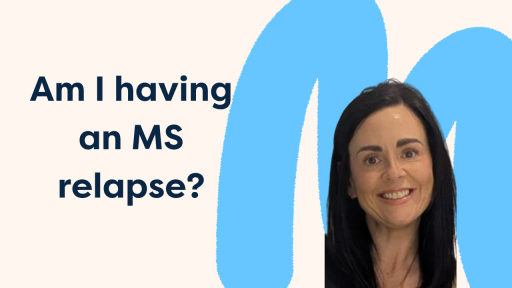
Watch MS nurse Cat Alexander explain when worsening symptoms might indicate that you're having an MS relapse.
Any MS symptom can be associated with a relapse. The most common ones are issues with:
Relapses can affect different areas or systems of the body. The area(s) affected will depend on where the damage has happened in your brain or spinal cord. Some relapses only affect a single area. Others may affect several. Your MS team may describe your relapse in one of the following ways according to how you’re affected:
A true relapse happens because of new inflammation and damage in the central nervous system (CNS). But there are other reasons why your symptoms can temporarily worsen and this can be confused with a relapse.
Where there is existing MS damage, the nerves can sometimes find it more difficult to transmit messages efficiently due to an external factor. For example, a raised temperature can slow messages travelling along damaged nerves. Factors that can lead to a temporary worsening of symptoms include:
When this happens, it is often referred to as a pseudo relapse or pseudo exacerbation. Some people may also refer to it as a flare-up, which can be confusing as this term is also used by some people to describe a true relapse. Symptoms usually improve once the trigger is removed, for example after resting, cooling down or treating an infection. If this happens it is a good sign that it is not a relapse. But if symptoms do not return to normal then you should contact your MS team.
Every MS team works differently, so it is useful to check in advance what to do and who to contact if you think you may be having a relapse. Some services have dedicated relapse clinics. Others may discuss your concerns over the phone, by email or arrange an appointment to see you.
If you have sudden new symptoms and think you might be having a relapse, what you do next is likely to depend on the severity of the symptoms and how much they are affecting what you can do.
If your symptoms are relatively mild, you might choose to:
If an infection is identified, it can be treated and the symptoms should resolve. However, if tests are negative, this may indicate that you are experiencing a relapse.
There are times when you might want to contact your MS team more urgently such as:
If your symptoms are more severe, or having a big impact on you, then it is also worth seeking advice. This might include symptoms such as:
Although you live with MS, you can still develop other medical conditions. Contacting your GP or MS team means they can rule out any other potential causes for the symptoms you’re experiencing.
If you’re experiencing very severe symptoms that come on extremely rapidly, you may decide you need to seek further medical advice as a matter of urgency. You might use NHS 111 online (NHS.UK), ring 111 or go to the accident and emergency (A&E) department of your nearest hospital.
Your MS team will ask about the symptoms you’re experiencing, when they started, how they’ve changed and the impact they’re having on you. They will check if you’ve had tests to rule out an infection or if there is anything else happening in your life that could be making your symptoms worse. This could include questions about stress and your sleep. If you have periods they may ask about your menstrual cycle, check if you’ve given birth recently or if you’re going through perimenopause or menopause.
Keeping track of your symptoms and any medication you’re taking can make it easier to answer these questions. Think about the following.
Relapses can be a sign that your MS is becoming more active. So, even if you’re managing well and don’t think you need treatment for a relapse, it’s still important to let your team know about every relapse. This means they have all the information to make decisions with you about how your MS is currently being managed and whether any changes may be needed.
Your relapse should be recorded, and this should be passed on to your neurologist so there is a full record of your relapses and symptoms.
If your MS team confirms that you’re having a relapse, they should discuss with you whether you need treatment for:
If your relapse is having a considerable impact, such as affecting your walking or vision, your GP or MS team may suggest you take a short course of high dose steroids. Steroids can help to speed up recovery from a relapse by reducing inflammation. However, they don’t affect how well you recover from a relapse in the long term or alter the course of your MS.
Most people generally tolerate steroids well but, as with all medicines, some people experience side effects. Your MS team should discuss the benefits and risks of taking steroids, so you can decide the best option for you.
Methylprednisolone is the steroid used to treat MS relapses. It can be taken as tablets or given as a drip into a vein (intravenous infusion) in a hospital clinic. The NICE MS Guideline (NICE.UK) recommends:
Read more about steroid treatment for MS relapses. We also have information about why steroids may not be offered.
Your team may offer treatments to help you with the symptoms of your relapse. These approaches can be used regardless of whether you are taking steroids or not. They might include:
During a relapse it can be difficult to think through complex tasks if you’re feeling stressed or overwhelmed. This is common but should improve as you recover. However, if you have a cognitive relapse, it can directly affect your concentration, mood, thinking and memory. An occupational therapist or neuropsychologist can work with you to develop strategies to help manage these difficulties. In many areas, access to neuropsychology services may be limited, but there may be online services available which you can self-refer to instead. Your GP or MS team will be able to advise on what is available in your area.
If you have had a motor relapse, which has affected your mobility, or you’ve been less active due to other symptoms, this can lead to muscle weakness (deconditioning). A physiotherapist can provide support and advice to help you get back on track with staying active and building your stamina back up.
If you’ve had a very severe relapse, you may need short-term help from social services to help with some aspects of your personal care, like dressing or preparing meals.
If you are pregnant, you are less likely to have a relapse during the pregnancy, especially in the third trimester. The risk of relapse increases in the 3 to 6 months after pregnancy. This is thought to be due to changes in the levels of hormones, particularly oestrogen, during and after pregnancy.
If you do experience a relapse during pregnancy, it is difficult to predict how severe it might be. But as far as is known, relapses do not affect the baby. Do let your MS nurse or neurologist know if you are experiencing symptoms of a relapse, regardless of whether it is severe or not.
The steroids used to treat MS relapses are generally considered safe to use during pregnancy. If you have a disabling relapse, you may be offered high dose methylprednisolone regardless of trimester. You can take them orally or by intravenous infusion. Any underlying infection should be ruled out before steroids are suggested.
If you are breastfeeding, you may be concerned about having to stop if you need to take steroids for a postpartum relapse. As long as you’re not experiencing any symptoms that make it difficult for you to breastfeed safely, then you can continue whilst taking methylprednisolone. Generally, there is no need to discard milk or fully stop feeding.
If you are at all concerned about the transfer of medication to your baby through your breastmilk, your MS team can advise you on the best time to feed to minimise this.
Read more about pregnancy and MS.
The recovery process begins as the attack by the immune system calms down and the inflammation settles. As your body begins to repair the damaged myelin (remyelination), your symptoms should gradually start to improve.
The time to recover from a relapse can be difficult to predict, and it may take time before the full extent of recovery becomes clear. Typically, it happens over a period of a few weeks or months. But it can take up to 12 months.
You may find that when you recover you feel the same as you did before the relapse. But remission doesn’t always mean that all the symptoms you had during the relapse will go away completely. This is because the new myelin tends to be thinner than the unaffected myelin, so messages may not travel as quickly as before the relapse. Because of this, although symptoms will usually be less intense than they were during the relapse, they may not fully improve. It may not be clear until up to a year after your relapse whether any symptoms will persist or whether there will be any lasting change in function.
Watch MS nurse Cat Alexander talk about what to expect as you recover from a relapse and MS nurse Mavis Ayer describe the role steroids may have in your recovery.
Relapses are usually unexpected and can take you by surprise. The symptoms can be difficult to deal with and leave you feeling overwhelmed. It is likely that you will feel unwell and more tired than usual while you’re recovering. At first, it can be helpful to rest as much as possible to help with any fatigue and try to avoid doing anything that makes your symptoms feel worse if you can. You should contact your GP if you’re not well enough to work.
It’s important to look after your general health to help your recovery. This includes:
As you begin to recover, you can slowly build back up to your usual activities and normal routine. This might include some gentle exercise if you’re able to do it safely.
Consider asking for support from family and friends while you recover. It can be useful to build a support network of people who can help at short notice. Let them know what they can do that would be most useful so you can take time to rest.
If you have children living with you, encourage them to take responsibility for age-appropriate chores. If you have young children, consider discussing and planning in advance what will happen if you have a relapse. Spending time away from home with trusted family members or friends for a few hours or overnight can help them become familiar with these arrangements.
If you’re really struggling at home, let your MS team know. It may be possible to arrange for some short-term support through social services or organisations such as Home Start (HOME-START.ORG.UK) if you have young children.
You may need to take some time off or reduce your hours while you’re recovering. Let your manager or human resources (HR) team know that you’re having a relapse.
If you have to stop working because of the relapse it can be helpful to stay in regular touch with your manager. That way you can have a plan in place when you’re ready to return. For example, you might be able to have a phased return where you slowly build up the number of hours or days you work until you’re back to your normal working pattern.
If you’re able to continue working, it may be possible for your employer to provide some adjustments or support depending on your needs. This might include:
Under the Equality Act, you're entitled to ask your employer to make reasonable adjustments to help you remain in work. Make sure you’re familiar with any policies and procedures around sick leave, and other work-related issues.
If you’re self-employed, keep up to date with any benefits you would be entitled to, and how to claim them, in the event you are unable to work.
Read more about work and MS. We also have information about support if you are studying at college or university.
Having a relapse can trigger strong emotions such as anxiety, or concerns about the future. A relapse can be a stark reminder that you are living with a long-term condition and things may change. You may start worrying that your disease modifying therapy (DMT) isn’t working well enough or feel anxious about how well you’re going to recover from the relapse. You might feel frustrated that a relapse has affected plans you were looking forward to.
If you’re finding it difficult to sleep, this can make dealing with everyday situations more difficult than usual. Some medications, including steroids, can also affect your emotions.
It’s normal to feel this way and to be concerned about the future. These feelings are likely to subside as you recover. If they don’t, or they become overwhelming, talk to your GP or MS team about what psychological support may be available in your area. You can also refer yourself to online talking therapies to help with anxiety and depression (NHS.UK).
Your MS team may arrange a follow-up appointment a couple of months after the start of your relapse. If needed, this could be face-to-face or over the phone. It is an opportunity for you to let them know how you’re doing and discuss if you need any additional treatment or support.
Relapses often happen with little or no warning, although some people say they can tell when a relapse is coming on. They usually happen spontaneously with no obvious cause. There is nothing you could have done to stop them happening.
Some people with MS are eligible to take a disease modifying therapy (DMT). Disease modifying therapies (DMTs) are treatments for people with MS that can help change the course of your MS by reducing the number of relapses and slowing down the build-up of disability in the long term.
Infections can cause a temporary increase in symptoms (pseudo relapse), but more serious infections can also trigger a genuine relapse. This risk can be reduced through good personal hygiene, avoiding people who are ill and staying up to date with any recommended vaccinations.
There are other factors that can also increase your risk of having a relapse. Looking after your physical health and mental wellbeing could help minimise some of these factors and reduce your risk of future relapses.
If you are not currently taking a DMT, you may want to discuss this with your MS team to check if you would meet the eligibility criteria.
If you are already taking a DMT, a relapse could be a sign that your current treatment is not working well enough. You might want to consider whether you should stay on your current treatment or explore other options with your MS team.
If you are taking a DMT, it is important to stick to the dosing schedule to get the most benefit. Occasionally forgetting to take it is unlikely to have much impact. But if you regularly miss doses, it will not be as effective, and you will increase your risk of a relapse. If you’re struggling to take your DMT regularly, perhaps because you’re finding it difficult to get into a routine or you’re struggling with side effects, talk to your MS team.
Read more about disease modifying therapies (DMTs) for MS
Vaccinations against infectious diseases are routinely offered in the UK. Keeping up to date with vaccinations can reduce your risk of infection or make symptoms much milder if you do become unwell. This includes flu (NHS UK). It is recommended that people with MS have the annual flu vaccination.
You should also consider having any vaccinations that are recommended by your MS team if you’re travelling abroad.
Read more about MS and vaccinations
Making positive lifestyle choices can help you live well with MS, making it easier to cope with symptoms and relapses. A well-balanced diet, keeping hydrated, regular exercise and maintaining a healthy weight can mean you’re better placed to recover from a relapse. But staying healthy can also reduce your risk of relapse triggers such as infections.
Smoking has been shown to increase both relapse rate and your risk of progression. It also increases the risk of chest infections, which can trigger relapses. If you do smoke, you can reduce these risks if you’re able to stop.
Read more about support to help you quit smoking (NHS.UK)
Many people living with MS report that prolonged periods of stress may trigger a relapse. Some studies have suggested a link between stress and relapses, but others have been less clear about a link. Overall, learning to manage stress is a way of taking control of your MS and may potentially reduce your risk of relapse.
This information has been developed by the MS Trust Health Information team. Our team produces accurate evidence-based information to help you navigate your every day – working alongside health professionals. We would like to thank Catriona Alexander, MS Specialist Nurse, Hampshire and Isle of Wight Healthcare NHS Foundation and Amy Harbour. MS Specialist Nurse (Clinical Lead SE Hants). Hampshire and Isle of Wight Healthcare NHS Foundation Trust for checking the clinical accuracy of this information.